
Technical Data
- Bathroom Faucets Finishes
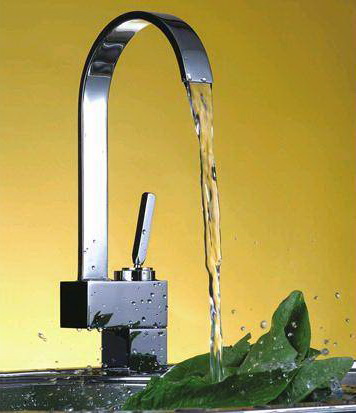
Faucets display an almost infinite variety of styles and finishes.In fact, there are so many finishes, styles and sizes to choose from that it can be confusing trying to find the one that meets your needs best.
Try to anticipate your needs before you buy, but also don't forget to consider more practical matters. For example, highly polished fixtures are very attractive when kept clean and shiny, but they do tend to show water spots more readily.
With all types of faucets, look for quality.
Avoid lightweight faucets with plastic integral parts and those that use washers to control the flow of water. An Inexpensive unit may look as good as the more expensive ones, but it will not last as long. The money you save buying it will just go to the plumber who has to replace it in a few years. The best faucets offer effortless operation and a long-lasting finish.
When choosing a finish for a kitchen faucet, it's important to understand how the faucet will be viewed in the room.While at first blush, it seems logical to match only the sink in this selection, from a visual perspective, the faucet should more practically match it's surroundings. From across the room, the sink may not be visible, but the appliances, the cabinet hardware, the counter top and wallpaper will all be visible. A faucet that clashes with these elements will seem out of place even though it may complement the sink on which it is mounted.
Materials
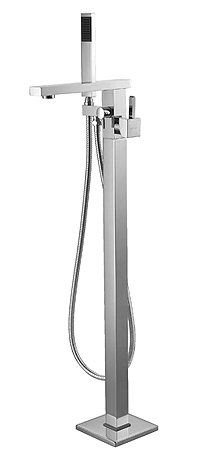
The finish of the faucet is a matter of personal preference. Faucets can be chosen to match sinks, countertops, or other kitchen appliances. Traditionally, the two most popular finishes have been polished chrome and polished brass. But in recent years other finishes have become more popular such as stainless steel and satin or brushed nickel. These offer a more muted look than polished chrome and tend to match stainless steel appliances well.
Interestingly, while chrome is the most durable, it's also the most affordable.Alternative coatings are substantially more expensive.Although each manufacturer may have it's own name for a finish, below is a list of common kitchen faucet finishes:
Polished Chrome, Polished Brass, Colored epoxy (glacier white, almond, biscuit, and black), Polished nickel, Satin nickel, Bronze, Silver, Gold, Platinum, Stainless steel, Porcelain
Brass has been a common finish since the nineteenth century. It is a warm but relatively high maintenance finish, requiring frequent polishing to keep it shiny. Even with constant polishing, unprotected brass will tarnish (brown spots) in time. For obsessive renovators, this tarnish is desirable, but to most people it is not.
Manufacturers use a number of techniques to protect brass and reduce maintenance. Supercoating is a two-part epoxy that is applied electrostatically and baked on to insure a lasting shine. The Supercoat finish is good for those who appreciate the look of brass but wish to avoid the necessity of polishing, but it is being supplanted by PVD (see below).
Enameled plastic is a popular choice when non-metallic colors are desired. It can be used to match any sink color, but its finish can be scarred.
Chromium plating (chrome) became popular in the 1930's and continues to be one of the most popular finishes.Chrome is a sophisticated tarnish-resistant finish.To create this finish, solid brass fixtures are electroplated with chromium.Like brass, however, chrome requires frequent cleanings to maintain its shine.
Due to its resistance to tarnish, nickel was the preferred finish from the 1880's up to the 1930's when chrome was introduced.It has experienced a resurgence in recent years.Nickel finishes range from the more chrome-like polished nickel finish to the more stainless steel-like matte nickel finish.Polished nickel is a smooth lustrous finish.It is sometimes brushed to create matte or satin nickel finishes.The brushing highlights the beauty of the nickel and creates a low maintenance finish that hides scratches, fingerprints, and water spots.
Stainless steel is a recent offering that has quickly gained popularity.It is often chosen to match the sink on which it will be mounted, but these units should be chosen carefully because their color may not be a perfect match.Many take on a slightly bronze hue.The Grohe 33.759 is one model that has a true stainless steel color.Weathered and antiqued finishes such as weathered copper, antique copper, antique brass and antique pewter are chemically treated to age them.The result is a piece that looks as though it has been installed and in use for many, many years.
PVD Finishes
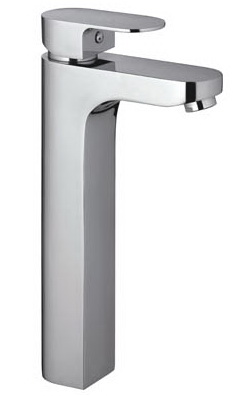
Today, most manufacturers use a technology called PVD(physical vapor deposition)for their faucet finishes.The process involves the deposition of zirconium nitride, titanium nitride, or other metallic ion combinations under low vacuum conditions.The finishes laid down with this method are considered practically indestructible.PVD can be used on almost any material from brass to plastic.
The complete PVD finishing process from cleaning to final inspection takes place under clean room conditions that include hygienic air purification, pressurized to reduce dust and other contaminants.Individual parts are hung on racks and travel through a proprietary nine-step ultrasonic, aqueous cleaning process.Sound-wave vibrations and chemicals thoroughly clean and prepare the surface for coating.The cleaning process contains no chlorinated solvents or other ozone-depleting chemicals.
After drying and inspection, the parts are taken to the PVD chamber for the coating process.This process combines reactive gases such as nitrogen and acetylene with specific metals to form a thin, film-like metal alloy that coats metal parts creating an elegant, highly durable finish.The chamber is controlled by a computerized system that stores and monitors 64 individual processes customized to meet specific parameters for various parts and different finishes, such as brushed nickel, copper and oil-rubbed bronze.These finishes are darker and not particularly shiny which gives them a unique, muted look.
PVD coatings are extremely thin, usually.05 microns thick.No clear coat protection is required with a PVD finish, and no toxic wastes are produced as they are in electroplating.
PVD finishes offer exceptional richness and depth, and are resistant to discoloration by sunlight.In addition, in abrasion tests conducted by independent testing laboratories, PVD finishes have been found to be more than 23 times more resistant than chrome plating.Ask your wholesaler or manufacturer's rep for specific results.
All PVD finishes are not created equal, however.All products finished with the PVD process must first have a finished surface of some sort.In most cases, products are chrome plated then processed in a PVD chamber for coloring.
The final finish will only be as good as the surface it is adhered to.If the chrome underneath begins to peel(either from expansion and contraction, or because the plating is too thin), the finish will fail.
Each of the manufacturers has a different name for their finishes which use this process, but the procedure is similar.Regardless of the type of finish, however, harsh abrasives should always be avoided when cleaning faucets.The average PVD faucet will cost 20%to 35%more than chrome.
Due to differences in monitors, colors cannot be represented in their true quality.
 Facebook
 Twitter
 Google+
 Youtube
 Pinterest
 Houzz
Houzz